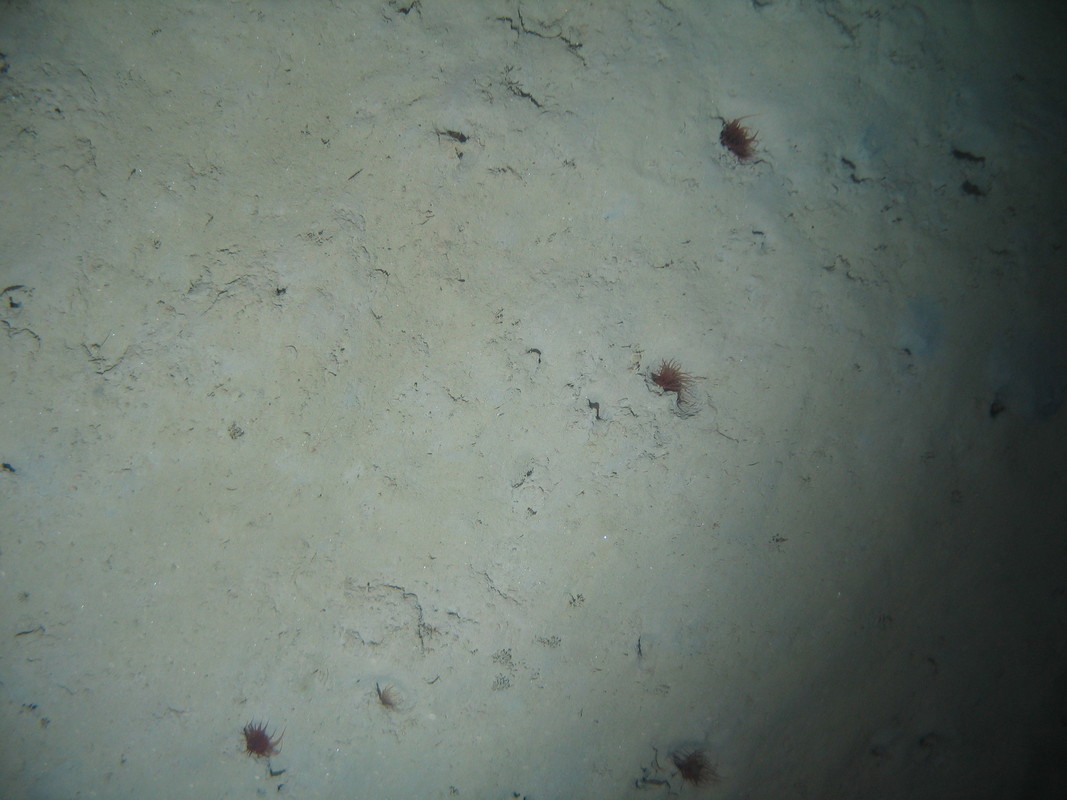
Description of biotope or habitat type
To understand more about what this page is describing, see How to use the classification. See also How to cite.
Cerianthid anemones and burrowing megafauna in Atlantic mid bathyal mud
Physical habitat description
| Salinity | Full (30-35 ppt) |
|---|---|
| Wave exposure | |
| Tidal streams | |
| Substratum | Mud |
| Zone | Atlantic mid bathyal |
| Depth Band | Biotope depth range 600 - 1300 m (based on zone); assemblage recorded from 214 - 1245 m |
| Other Features |
Download comparative physical and biological data. The comparative tables enable a rapid comparison of the species composition and principal physical characteristics between a given set of biotopes.

- Records used to define the biotope (core records)
- Other records assigned to this biotope, marked as 'certain'
- Other records assigned to this biotope, marked as 'uncertain'
- Predicted extent of the level 3 (for sublittoral rock & deep sea) or 4 (for sublittoral sediment) habitat
Point data based on records in the UK Marine Recorder Snapshot. Predicted habitat extent is from UKSeaMap.
Description
This biotope is characterised by burrowing anemones (Cerianthidae), unidentified hydroids (Hydrozoa) and unidentified tube worms (Sabellidae) on bioturbated mud with phytodetritus. Video observations suggest there are many large burrows supporting associated unknown megafauna, the rare occurrence of seapens (Virgularia mirabilis) and also stalked sponges (Hyalonema) associated with this biotope.
Situation
No situation data available.
Temporal variation
No temporal variation data available.
Characterising species
| Taxon | % of core records where taxon was recorded |
|---|---|
| Cerianthidae | |
| Hydrozoa | |
| Sabellidae | |
| Virgularia mirabilis | |
| Hyalonema |
Similar biotopes or habitat types
M.AtUB.Mu.SpnMeg.KopFie
Seapens are more prevalent and the dominant species is Kophobelemnon stelliferum.
SS.SMu.CFiMu.SpnMeg
Shallower variant in the circalittoral. Seapens are denser.