Description of biotope or habitat type
To understand more about what this page is describing, see How to use the classification. See also How to cite.
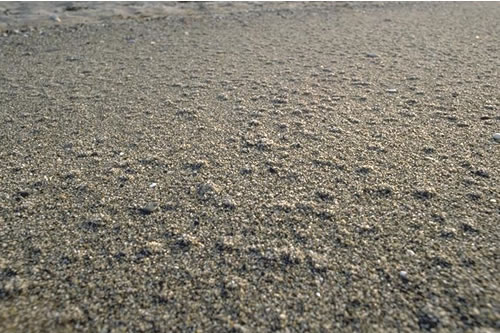
Echinogammarus incertae sedis planicrurus in mid shore well-sorted gravel or coarse sand
Physical habitat description
| Salinity | Full (30-35 ppt) |
|---|---|
| Wave exposure | Moderately exposed |
| Tidal streams | |
| Substratum | Gravel; very coarse sand (no fine sand or mud) |
| Zone | |
| Depth Band | Mid shore, Upper shore |
| Other Features | The lee of obstacles such as rocky outcrops and groynes |
Download comparative physical and biological data. The comparative tables enable a rapid comparison of the species composition and principal physical characteristics between a given set of biotopes.

- Records used to define the biotope (core records)
- Other records assigned to this biotope, marked as 'certain'
- Other records assigned to this biotope, marked as 'uncertain'
Point data based on records in the UK Marine Recorder Snapshot.
Description
Shores of well-sorted gravel with a predominant particle size of 4.0 mm but ranging between 3 and 6 mm support dense populations of the amphipod Echinogammarus incertae sedis planicrurus. Material finer than 2 mm reduces the ability of the amphipod to survive. The amphipod is tolerant of variable salinity, although a preference for a specific salinity regime has not been determined. As this habitat is regularly under-surveyed, its distribution is unclear.
Situation
The biotope is often associated with the lee side (wind or tide) of obstacles such as rock outcrops and groynes; this may be due to the deposition of algal debris, shelter from wave action or degree of sorting due to localised tidal flow around the obstacle (most likely a combination of the first and last influence).
Temporal variation
Not known.
Characterising species
| Taxon | Relative importance of taxon for defining this community (%) | Typical abundance - SACFOR scale | Typical abundance - (count per m2) | % of core records where taxon was recorded |
|---|---|---|---|---|
| Echinogammarus incertae sedis planicrurus | 100 | Frequent | 7 | 81-100% |
Similar biotopes or habitat types
LS.LSa.MoSa.BarSa
Shores with finer sediments (mobile coarse sands). The infauna is very poor, often the habitat is devoid of macrofauna.
LS.LSa.St.Tal
Occurs on the strandline on shores with a wider range of exposures and sediment types, confined to driftlines of seaweeds and other debris. The sandhopper Talitrus saltator dominates the fauna.Classification history of this biotope or habitat type
| Classification version | Code |
|---|---|
| 2015 (15.03) | LS.LCS.Sh.Pec |
| 1997 (97.06) | LGS.SH.Pec |